
Green Dyed Bowl # 468
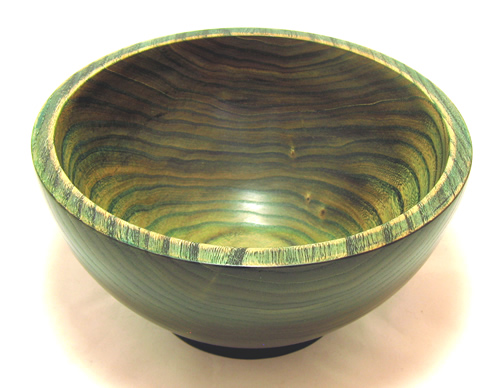
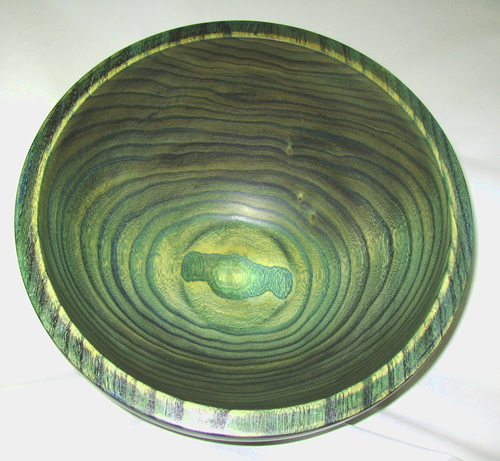
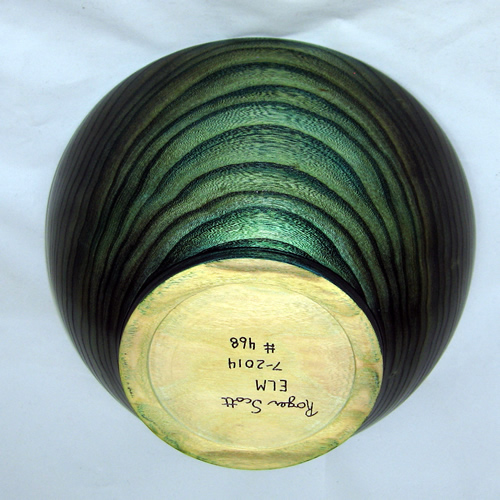
Piece #468 – Elm Dyed Green – 10.5″ by 5.5″ – SOLD


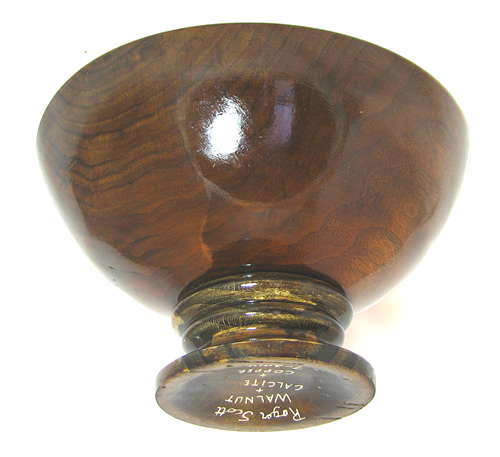
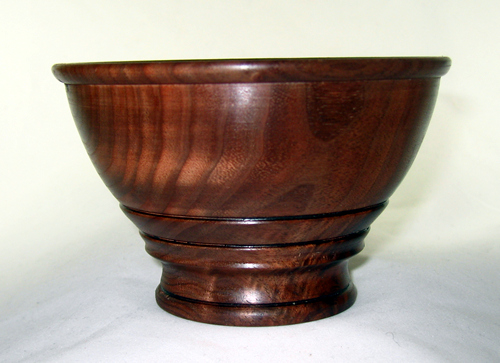
This bowl has quite the history. It started as a plain walnut bowl with an orange Calcite inlaid rim. As I parted it off of the tenon I accidentally cut through the bottom. “Ouch!” To fix the hole I added the pedestal bottom. I thought I would put a Calcite inlaid sunflower in the bottom. After a failed attempt at this I tossed the bowl on the reject shelf. About 18 months later I picked it up and gave it a new look. A Copper leaf sleeve put into the bottom would cover the failed sunflower. A chemical patina completed the Copper inside.
Roger Scott, Woodpops
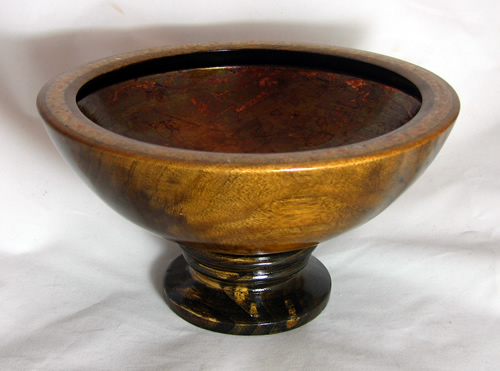
Walnut
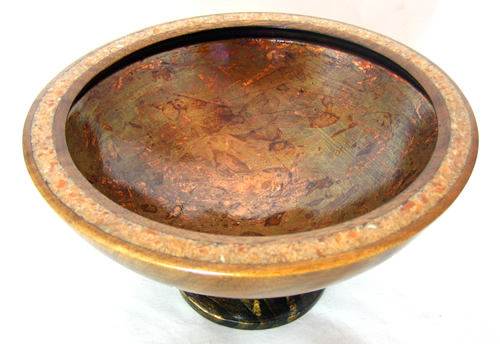
Calcite Rim, Copper Leaf Inside
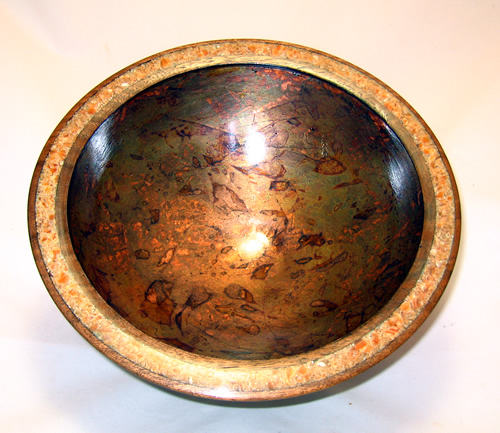
Copper Chemical Patina
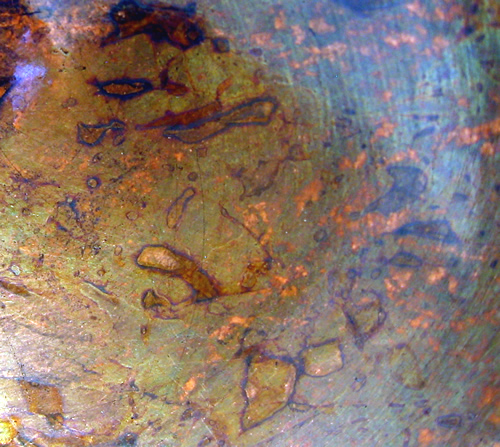
Copper with Chemical Patina
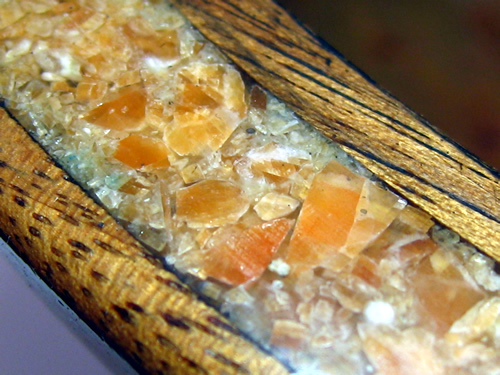
Orange Calcite Inlay

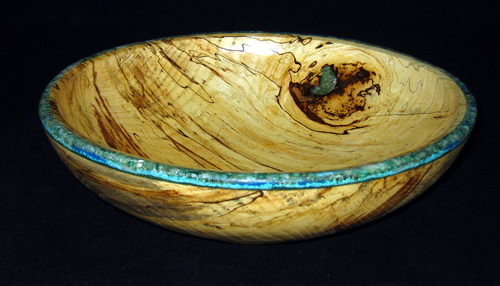
This spalted Hackberry bowl has many features to separate it from others. The natural spalting effect is quite striking. First I stabilized any checking with very thin CA glue and sanded. To play off of the great spalting and to enhance the wood grain I treated the wood with Tannis and Iron Water. Then I heavily sanded most of the surface blackened wood away leaving the blackened sub grain. Next I washed the wood with a very light yellow dyed Denatured Alcohol solution then sanded lightly. I sealed the wood with Dewaxed Shellac then put on several coats of my secret tung oil finish. After curing for four weeks the bowl was buffed and polished.
The inside bead sets proud of the surface of the bowl and rolls over the inside edge. It is made of clear Calcite dyed black, Obsidian, and white Calcite highlights. It was sanded and polished through 4000 grit paper and then polished with Tripoli and white diamond paste on a buffing wheel. It is quite lovely.
Roger Scott, Woodpops


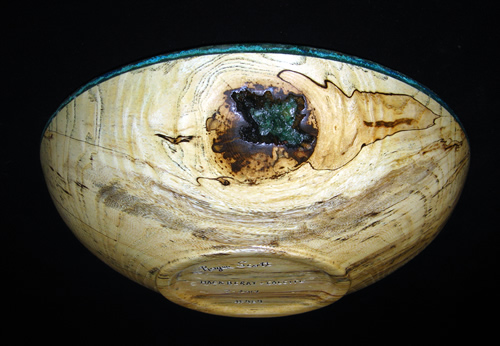
This epic spalted Hackberry bowl had a branch that rotted off of the tree part that it came from. Rather than leave the hole that it left in the bowl, I filled it in with Calcite dust. On the inside of the bowl I polished it to a high luster. (See on upper right dark spot in first photo below.) The outside of the bowl had a rough inclusion where the branch rotted off. I left the rough Calcite show into the inclusion for added character. (Third photo below.)
The rim of the bowl has a rounded over outside Calcite bead for added beauty. As I said, “This bowl is Epic.”
Roger Scott, Woodpops

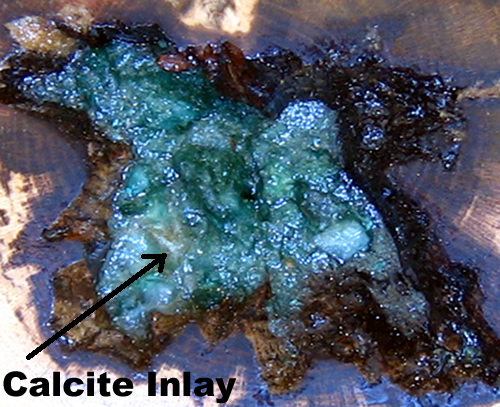
Close up of Outside of Knot Hole Inlay
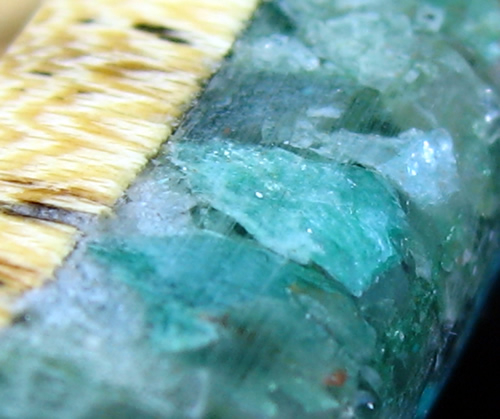
Calcite Rim

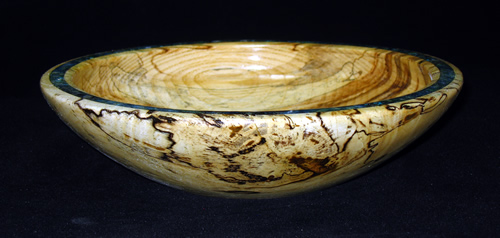
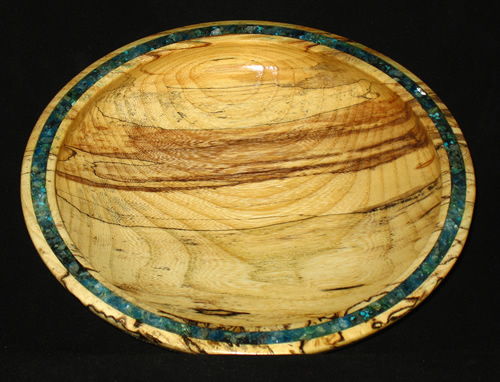
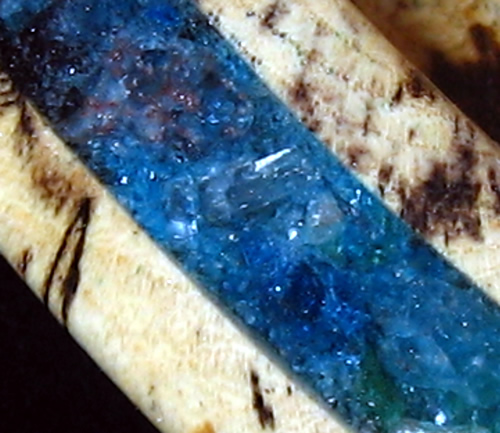



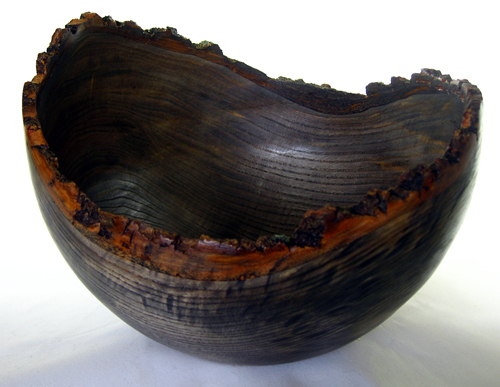
This is the fourth piece in a series called “Fault Lines”. The wood came to me as a result of a really bad thunderstorm in Knoxville, TN, Spring 2011. This huge Chestnut Oak was blown down across the road about 1 mile from my house. The County road service cut it into manageable pieces and moved it out of the way. I came the next day in my pick-up truck to obtain a piece. It took Carolyn and me both to manhandle it up a ramp into the truck.
All four bowls in this series came out of the same cross section of the trunk. The piece was so big that it checked in several places. The figure was so nice I did not have the heart to throw it away. After studying it awhile I received the revelation to incorporate the checks into the design of the four bowls. I am really pleased at how they turned out. I got a resounding “WOW!” from my muse when she saw them. That’s the ultimate show of approval for me.

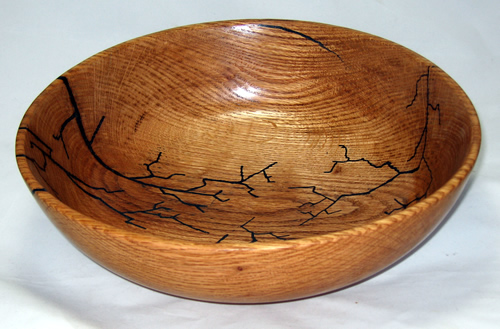
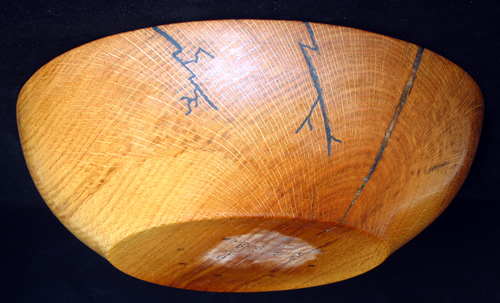
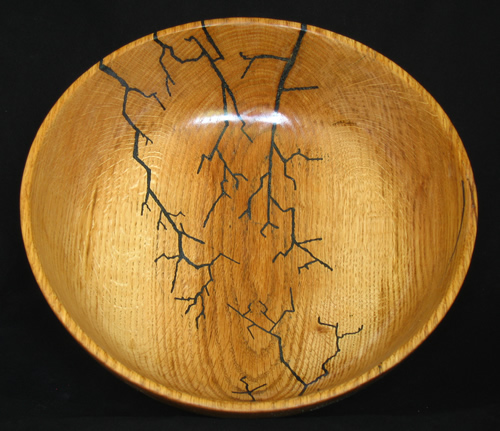

This is the third piece in a series called “Fault Lines”. The wood came to me as a result of a really bad thunderstorm in Knoxville, TN, Spring 2011. This huge Chestnut Oak was blown down across the road about 1 mile from my house. The County road service cut it into manageable pieces and moved it out of the way. I came the next day in my pick-up truck to obtain a piece. It took Carolyn and me both to manhandle it up a ramp into the truck.
All four bowls in this series came out of the same cross section of the trunk. The piece was so big that it checked in several places. The figure was so nice I did not have the heart to throw it away. After studying it awhile I received the revelation to incorporate the checks into the design of the four bowls. I am really pleased at how they turned out. I got a resounding “WOW!” from my muse when she saw them. That’s the ultimate show of approval for me.
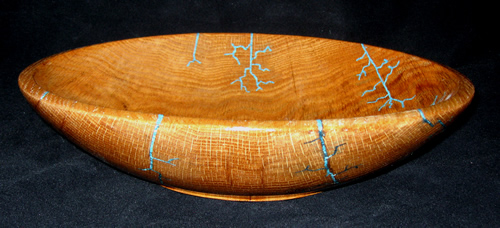

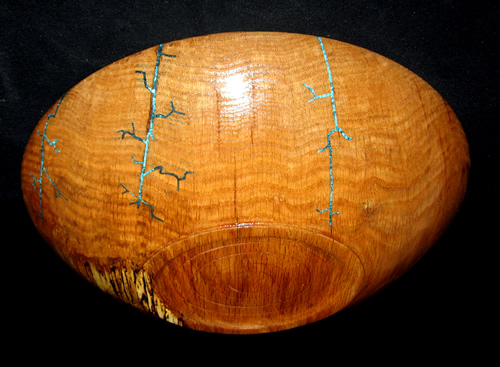
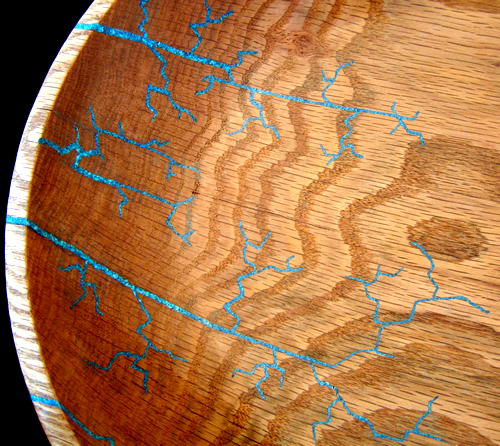
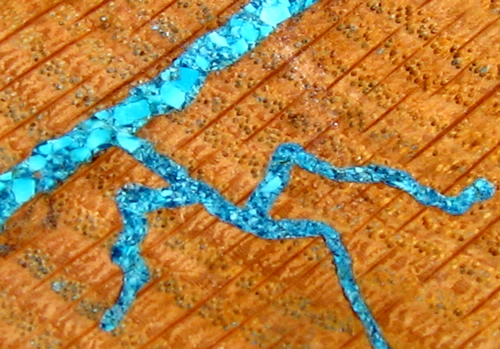

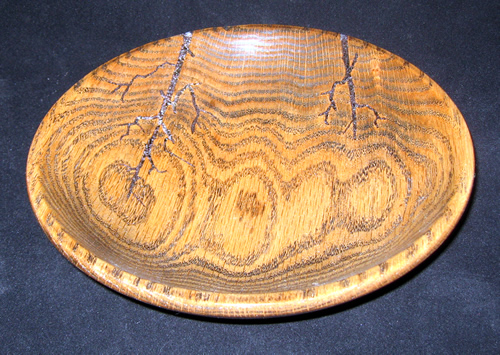
This is the second piece in a series called “Fault Lines”. The wood came to me as a result of a really bad thunderstorm in Knoxville, TN, Spring 2011. This huge Chestnut Oak was blown down across the road about 1 mile from my house. The County road service cut it into manageable pieces and moved it out of the way. I came the next day in my pick-up truck to obtain a piece. It took Carolyn and me both to manhandle it up a ramp into the truck.
All four bowls in this series came out of the same cross section of the trunk. The piece was so big that it checked in several places. The figure was so nice I did not have the heart to throw it away. After studying it awhile I received the revelation to incorporate the checks into the design of the four bowls. I am really pleased at how they turned out. I got a resounding “WOW!” from my muse when she saw them. That’s the ultimate show of approval for me.
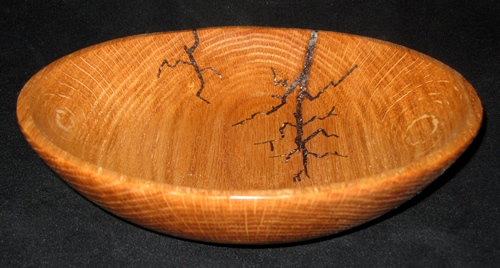
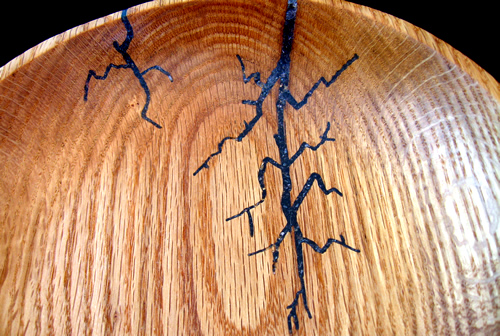
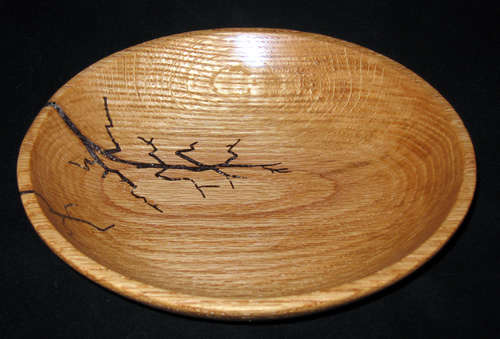
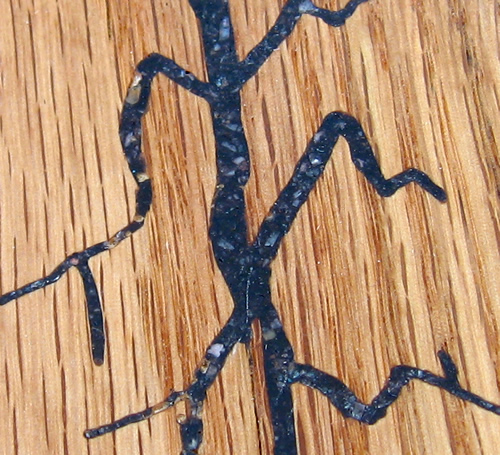

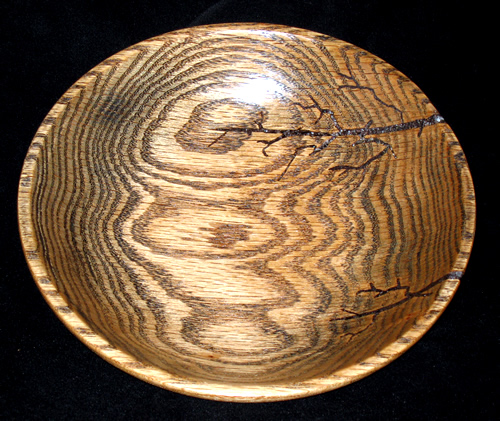
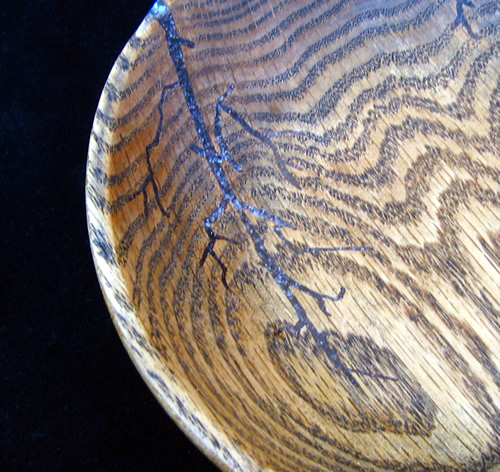
This is the first piece in a series called “Fault Lines”. The wood came to me as a result of a really bad thunderstorm in Knoxville, TN, Spring 2011. This huge Chestnut Oak was blown down across the road about 1 mile from my house. The County road service cut it into manageable pieces and moved it out of the way. I came the next day in my pick-up truck to obtain a piece. It took Carolyn and me both to manhandle it up a ramp into the truck.
All four bowls in this series came out of the same cross section of the trunk. The piece was so big that it checked in several places. The figure was so nice I did not have the heart to throw it away. After studying it awhile I received the revelation to incorporate the checks into the design of the four bowls. I am really pleased at how they turned out. I got a resounding “WOW!” from my muse when she saw them. That’s the ultimate show of approval for me.
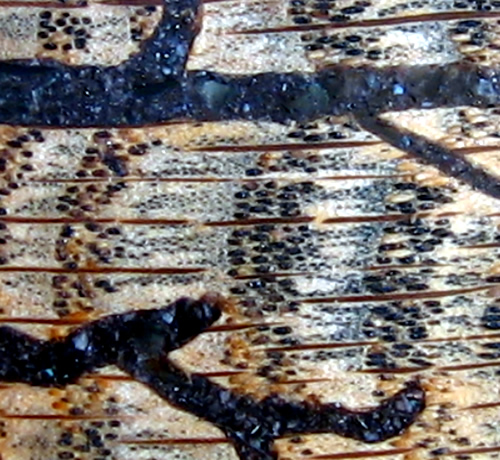
To highlight the figure I applied a solution of Iron Water. When it dried I sanded the resulting black finish off to reveal the grain.


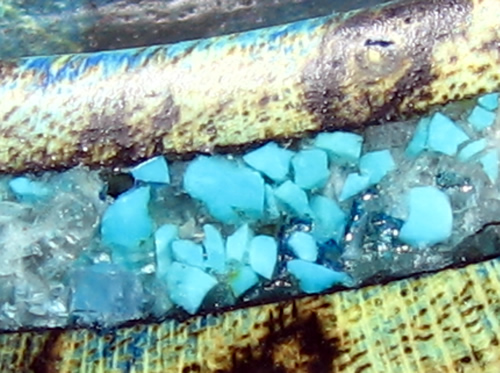
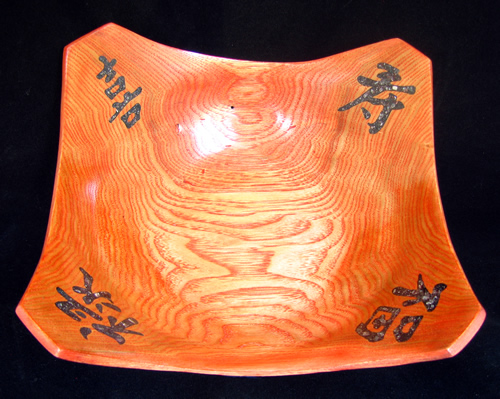
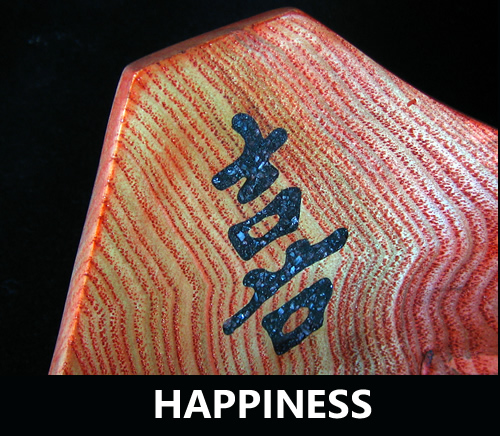
The Chinese characters for Happiness, Longevity, Luck and Prosperity adorn this elm, square bowl. It presents a suggestion of a pagoda roof. The characters were carved 1/8th inch deep with a dental drill then inlaid with calcite crystals. The calcite was polished to a high gem like sheen.








I treated the inside with a solution of tannic acid and water. I let that cure overnight. Next iron water was brushed on over the tannin. Because of the capillary action of the wood fibers the tannin had been absorbed deep into the wood where it intensified the natural tannin found in maple. The iron water reacted with the tannin changing the wood fiber black. Instant ebony look. Inside bowl then finished with three coats of Salad Bowl Finish.
I put two coats of a nice hard varnish on the outside of the bowl, letting each one cure really well. The next step was adding the Silver leaf and letting the leaf set over night. The chemical patina was applied and once it had the affect I was looking for I rinsed it off and patted it dry. I put the piece aside for three days. I applied 2 coats of Behlen’s Rock Hard Tabletop Varnish, sanding between coats. Last step was a trip back to the Lathe and the Beall Buffing System.
Roger Dale Scott
WoodPops


CLOSE UP OF TURQUOISE
INLAY



The character in this little rice bowl in nothing short of spectacular.


CLOSE UP OF STIPPLING



CLOSE UP OF INLAY
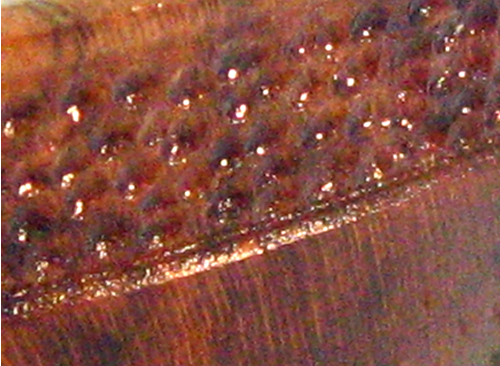
CLOSE UP OF TEXTURING

This oak bowl was born plain and characterless. It cried out for some pizzazz. I treated the inside with a solution of tannic acid and water. I let that cure overnight. Next iron water was brushed on over the tannin. Because of the capillary action of the wood fibers the tannin had been absorbed deep into the wood where it intensified the natural tannin found in oak. The iron water reacted with the tannin changing the wood fiber black. Instant ebony look.
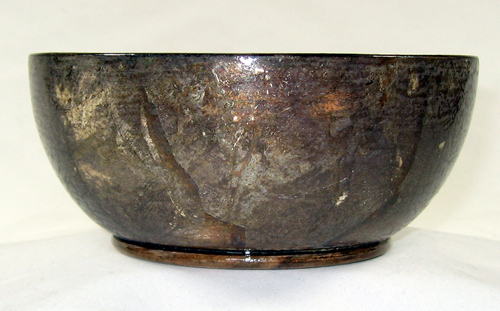
I put two coats of a nice hard varnish on the outside of the bowl, letting each one cure really well. The next step was adding the Dutch Metal leaf and letting the leaf set over night. The chemical patina was applied and once it had the affect I was looking for I rinsed it off and patted it dry. I put the piece aside for three days. I applied 2 coats of Behlen’s Rock Hard Tabletop Varnish, sanding between coats. Last step was a trip back to the Lathe and the Beall Buffing System.
Roger Dale Scott
WoodPops
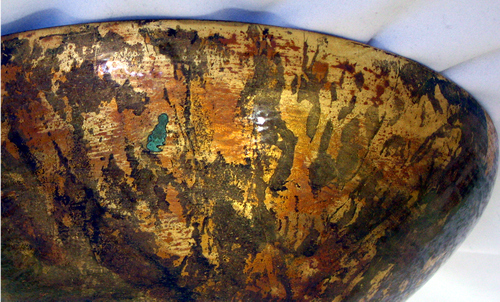
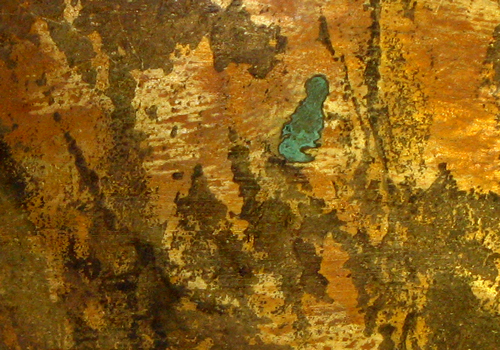
CLOSE UP
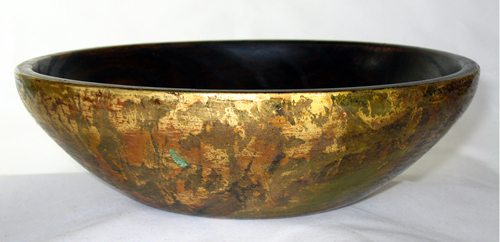
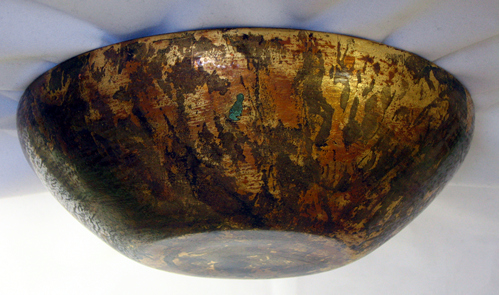
Bottom View

The 3D curls running through this piece are quite striking.
Roger Dale Scott
Woodpops


0
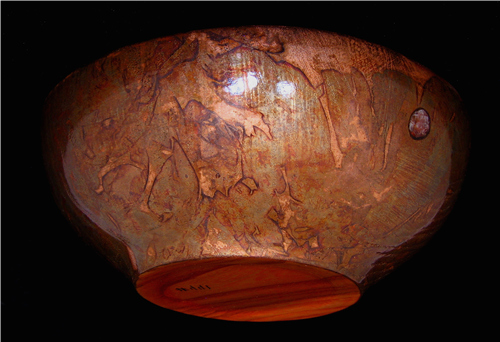
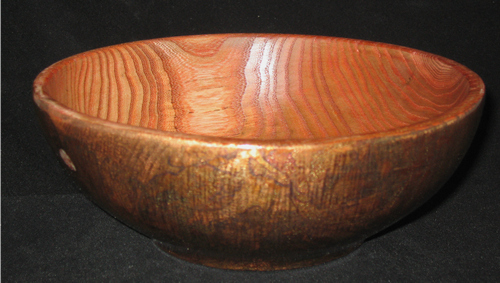
My neighbor from down the street gave me this elm last year (2013). This bowl has a very light orange tint on the inside. Then the wood was sealed with a 1 lb. cut of dewaxed shellac. The final finish on the inside is Salad Bowl Finish (food safe). The outside was sealed with varnish to give it a nice hard base for the copper leaf. Go to https://woodpops.com/about-2/gilding-with-patina-finish/ to see my process for adding leaf. Also at https://woodpops.com/gallery/greek-urn/. If you look closely you can see a knot hole that was filled in with calcite crystals. The chemical patina on the copper leaf is orange and compliments the dye tint on the inside. This is a great little bowl.
Roger Dale Scott
Woodpops


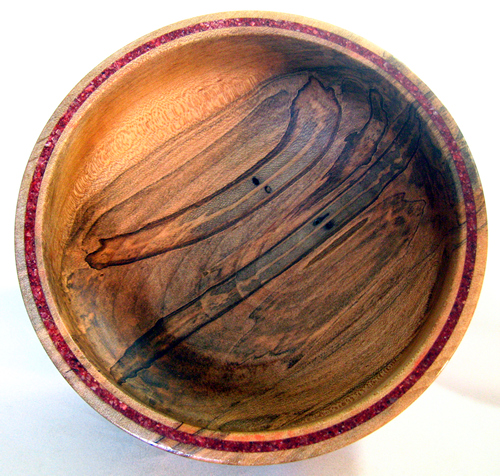
This spring I drove up to Baghdad Lumber to pick up the poplar for my new show display shelves. Cal found this ash burl in the back cut-off room. It’s more of a wana-be burl than a full grown burl. However, it has some really interesting character. The rose colored calcite enhances some of the colors running through the burl. It’s a nice piece.
Roger Dale Scott
Woodpops


This piece of wood came from Florida. A storm took it down in 2009. I got a lot of it! At the time I thought it was a nasty species. It is almost caustic. I have to take special precautions when I turn it. Now that is has dried out really well it has spectacular character. I only have a couple pieces left. I have made some nice pieces out of it through the years. I will be sorry when I use my last piece.

The dark area is the heart wood